Forward headers and keep a sticky session
Two controls for requests that need more than a URL. forward_sdrive_headers passes the headers you prefix with sdrive- on to the site. session_number keeps the same proxy session across related Standard requests.
500 credits after you confirm your email. No card.

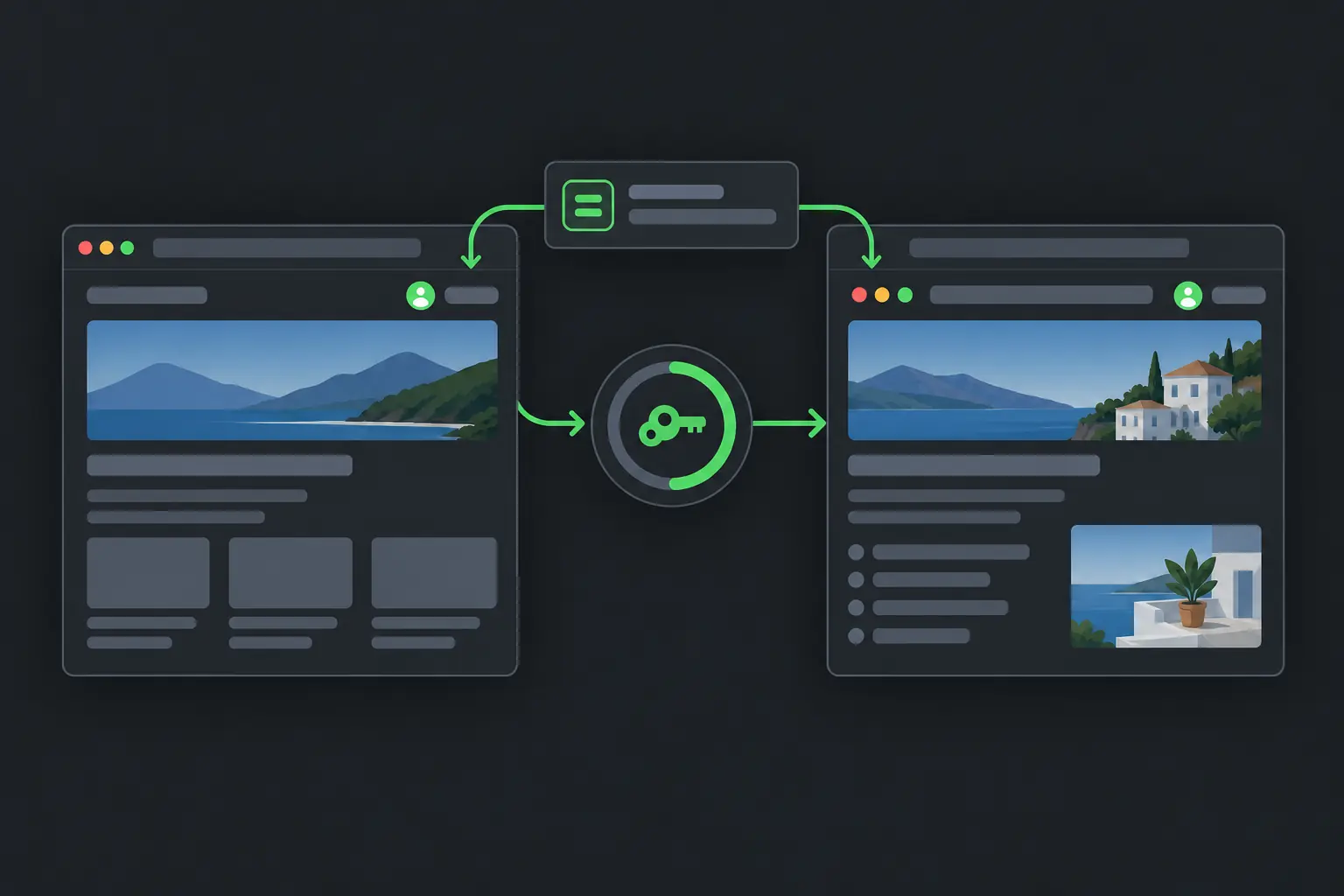
What this request asks for
- sdrive-Accept-Language
- Reaches the site as Accept-Language, because forward_sdrive_headers is true.
- session_number=cartA92
- Send the same value on page 2 to keep the same exit IP.
What it does for a request
- Forwards headers
- Set forward_sdrive_headers=true and prefix each header with sdrive-. The site receives it with the prefix removed.
- Keeps your API key separate
- Forwarded headers go to the target site. They do not replace the api_key that authenticates you to ScrapeDrive.
- Keeps a sticky session
- Send the same session_number on related requests and the site sees a consistent exit IP. The value also stays locked across Standard retries.
When to use it
Use it when
- A site expects a header, such as a language or a token you are allowed to send.
- Several requests should come from one exit IP, such as page 1 and page 2 of a list.
Leave it out when
- You use Auto mode. Auto owns the attempt identity and rejects session_number.
How to set it
forward_sdrive_headers
true or false
The default is false.
sdrive-<Header>
request header
Forwarded with the sdrive- prefix removed.
session_number
your session token
Standard mode only. Not accepted with auto=true.
Limits to plan for
- Forwarded credentials reach the target site. Send them only to sites you trust, and keep secrets out of query strings.
- The proxy provider may rotate an unhealthy exit IP, so a sticky session is not a permanent address.
- A session is a proxy identity, not a signed-in browser.
- Use these controls only as the acceptable use policy allows.
Other features
Start with a plain request. Add browser, routing or waiting settings only when the page needs them.
Automatic routing
ScrapeDrive picks HTTP or browser, proxy pool and location, under the max_credits ceiling you set.
See the feature, Automatic routingJavaScript rendering
Load the page in a real browser so content that scripts add is in the result.
See the feature, JavaScript renderingProxy routing
Send a Standard request through datacenter or residential proxies, or through your own proxy.
See the feature, Proxy routingGeo targeting
Route a residential Standard request through the country you name with proxy_country.
See the feature, Geo targetingWebpage screenshots
Add an image of the viewport, the full page or one element to a request.
See the feature, Webpage screenshotsOutput formats
Choose HTML, visible text or Markdown with result_type, at the same price.
See the feature, Output formatsAsync requests
Get a job id at once, then poll for the result or receive it at an HTTPS webhook.
See the feature, Async requestsBrowser waits
Hold a browser request for a load event, a CSS selector or a fixed delay.
See the feature, Browser waitsCost controls
Work out the price from the parameters, cap Auto with max_credits and read the settled charge.
See the feature, Cost controls
Try headers and sessions on your page
Paste a page URL into the Playground and see exactly what ScrapeDrive returns.
500 credits after you confirm your email. No card.